Schedule a Visit
Regardless of whether you require general advice or specific support, we are happy to help you.
Regardless of whether you require general advice or specific support, we are happy to help you.

Quick Answer: OPMT’s ODM (Original Design Manufacturing) process enables custom laser system development from concept to production in 6-15 months. With 302 patents, ISO 9001 certification, and tier-one automotive client experience (Nissan, Toyota, Honda), OPMT engineers complete solutions for applications beyond standard equipment capabilities—achieving tolerances to ±0.003mm and specifications impossible with catalog machines.
When standard laser equipment falls short of your production requirements—drilling 0.3mm holes through silicon carbide ceramics, finishing PCD tool geometries with ±0.003mm tolerances, or processing first-of-kind materials—you need an ODM partner who engineers complete solutions from concept to production floor.
The ODM difference vs. OEM:
| Approach | Your Responsibility | Manufacturer’s Role | Best For |
|---|---|---|---|
| OEM | Deliver complete engineering docs, CAD, BOM, schematics | Execute to your specifications | You have full design capability |
| ODM | Provide application requirements and performance objectives | Engineer complete solutions | You have application expertise, need laser engineering capability |
ODM partnerships leverage complementary strengths: your deep application knowledge (materials, quality requirements, production constraints) combined with manufacturer’s specialized laser engineering capabilities (laser-material interactions, multi-axis kinematics, precision optical system design).
Real-world impact: OPMT’s aerospace client achieved 66% cycle time reduction with femtosecond drilling that eliminated thermal damage entirely—capabilities impossible with catalog machines.
ODM capability requires engineering depth, not just manufacturing capacity. OPMT’s technical infrastructure includes:
| Facility | Focus Area | ODM Contribution |
|---|---|---|
| Provincial Manufacturing Innovation Center | Advanced manufacturing technologies | Platform development |
| Engineering Technology Research Center | System integration | Component optimization |
| Ultrafast Laser Processing Joint Laboratory (with Chinese Academy of Sciences) | Fundamental laser-material research | Novel processing methods |
| Foshan Postdoctoral Workstation | Advanced research | Cutting-edge techniques |
| Graduate Student Joint Training Site | Talent development | Technical innovation pipeline |
| Patent Type | Count | ODM Significance |
|---|---|---|
| Invention Patents | 62 | Novel solutions to fundamental technical problems |
| Utility Model Patents | 147 | Specific implementation protections |
| Design Patents | 17 | Exterior design IP |
| Software Copyrights | 9 | Control system innovations |
| Total | 302 | Industry-leading innovation capacity |
The invention patent concentration matters most for ODM—these represent novel solutions originating from customer-driven projects requiring capabilities unavailable commercially:
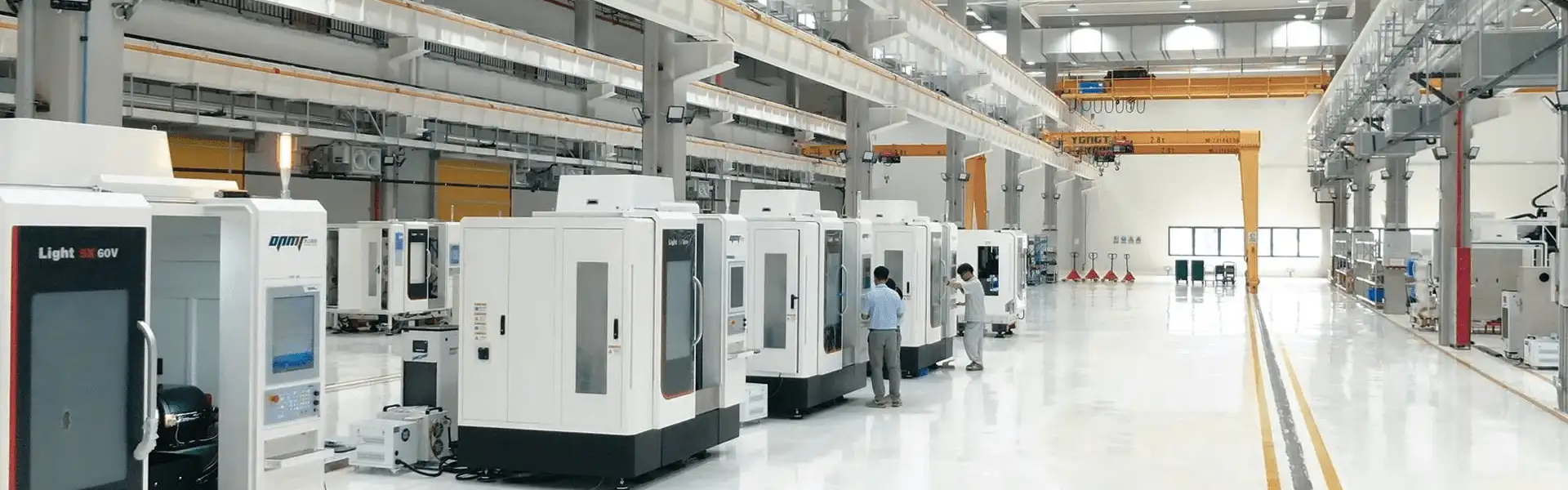
Equipment enabling complete design validation:
ODM development begins with structured requirement capture that differs fundamentally from sales consultations. OPMT’s applications engineers extract critical technical details through dialogue:
Example: “Precision cutting of titanium implants” becomes:
We request representative samples for comprehensive laser interaction testing:
| Test | Purpose | Outcome |
|---|---|---|
| Ablation threshold (355nm UV, 532nm green, 1064nm IR) | Wavelength selection | Optimal laser source specification |
| Pulse duration optimization (ns vs. ps vs. fs) | Processing regime | Metal vs. composite vs. ceramic approach |
| Parameter window mapping | Process robustness | Production repeatability confirmation |
Critical insight: Materials that appear visually identical behave differently under laser irradiation. Carbon fiber composites with identical appearance show dramatically different processing characteristics depending on resin matrix chemistry and fiber orientation.
The feasibility phase produces a TRS document with measurable success criteria:
| IP Category | Ownership | Example |
|---|---|---|
| Background IP | Developing party | OPMT’s laser technologies, control systems |
| Jointly Developed IP | Shared with defined rights | Custom processing methods, application algorithms |
| Foreground IP | Customer exclusively | Application-specific innovations, process recipes |
Concept design translates validated requirements into mechanical layouts, optical configurations, and control architectures.
OPMT’s approach emphasizes future adaptation while meeting immediate specifications. Our Light 5X series platforms demonstrate this:
Case study: Automotive tooling project requiring PCD insert finishing with <0.005mm profile accuracy
| Architecture | Pros | Cons | Decision |
|---|---|---|---|
| Ball screw drives | Lower cost | Thermal expansion exceeded error budget | Rejected |
| Linear motor direct drives | Thermal stability | Higher cost | Selected |
| Hybrid configurations | Balanced | Complexity | Rejected |
The most challenging custom engineering work. Example: Texturing curved mold surfaces with femtosecond lasers requires:
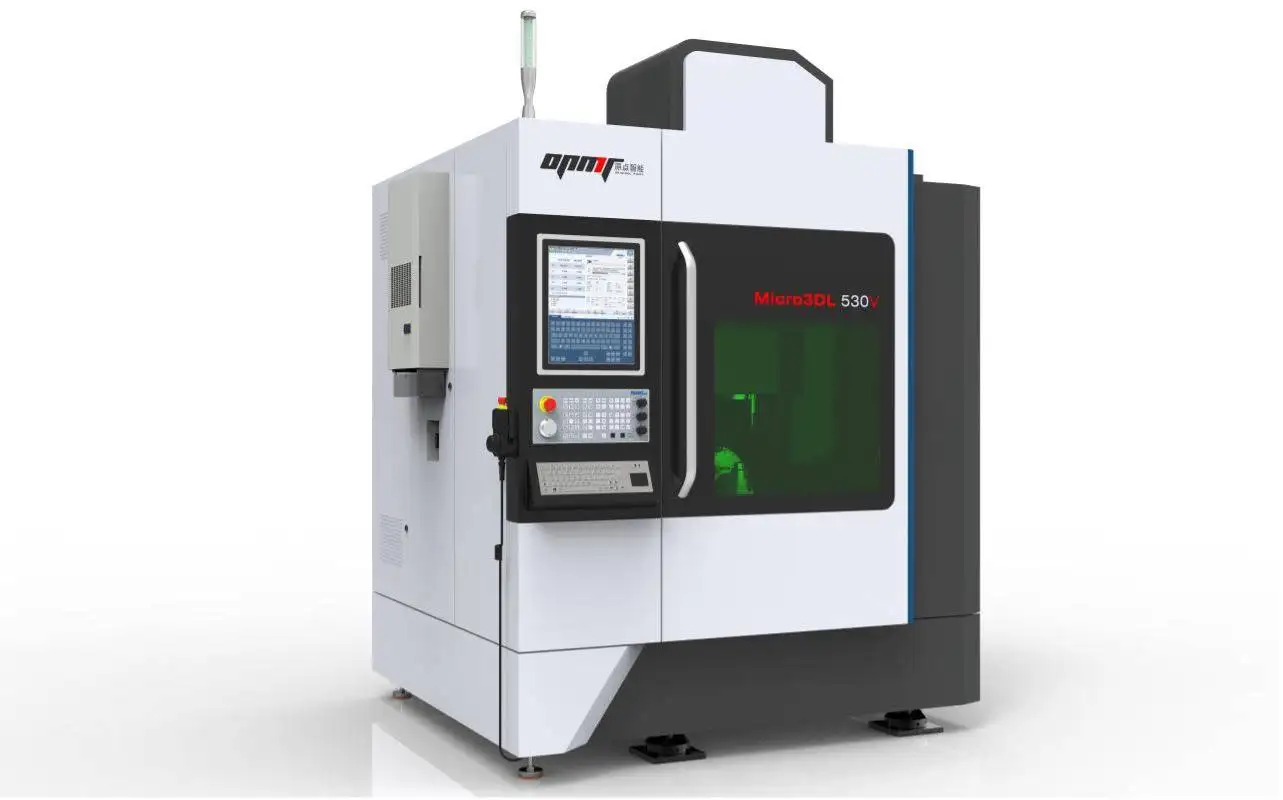
The Micro3D L530V femtosecond system achieves this through iterative optical modeling and experimental validation.
Evolved from ODM customer requirements that standard CAM packages couldn’t address:
Each ODM project contributes new modules:
OPMT builds functional prototypes using production-quality components—not laboratory mock-ups. Higher initial cost but compressed overall development time by eliminating “worked in lab, fails in production” phenomenon.
| Test Type | Method | Example Finding |
|---|---|---|
| Geometric Accuracy | Laser interferometry (729 positions: 9X × 9Y × 9Z) | Temperature-correlated positioning variations → enhanced thermal compensation |
| Dynamic Performance | Ballbar circular interpolation | Column-bed joint resonance → structural reinforcement |
| Process Capability | Statistical DOE | Optimal parameters for target geometry + max removal rate |
Example: Carbide tool grinding application
Client engineers witness testing, examine sample parts, review data, suggest refinements. This collaboration uncovers application nuances missed during requirement capture.
Production engineering converts validated prototypes into manufacturable products.
| Element | Standard Products | Custom ODM |
|---|---|---|
| Framework procedures | Standard | Customized inspection criteria |
| Calibration requirements | Standard | Application-specific protocols |
| Acceptance testing | Standard | Client-defined specifications |
Complex procedures require detailed work instructions:
For specialized components unavailable commercially:
Formal development-to-production transition:
Custom laser systems may demand:
| Requirement | Specification | Timing |
|---|---|---|
| Foundation | Vibration isolation for ±0.003mm accuracy | 60 days before shipment |
| Environmental | Temperature ±2°C stability | 60 days before shipment |
| Utilities | Adequate electrical, compressed air quality/flow | 60 days before shipment |
| Safety | Laser interlocks, beam enclosures (OSHA/EU) | 60 days before shipment |
Example: Automotive tooling system
| Day | Topics |
|---|---|
| 1-2 | Machine operation fundamentals, programming with GTR software |
| 3-4 | Process parameter selection, quality verification |
| 5 | Maintenance protocols, systematic troubleshooting |
Emphasis on teaching underlying principles—why parameters affect edge quality, how thermal effects influence accuracy—enabling operators to adapt procedures for future applications.
Typically 30-piece production lots with complete dimensional inspection:
Example: Medical device titanium implant finishing
Secure VPN connections enabling:
Client: Tier-one aerospace supplier
Application: Cooling holes in 2.6mm silicon carbide ceramic matrix composites for turbine components
| Requirement | Specification |
|---|---|
| Hole diameters | 0.3mm to 1.4mm |
| Positional tolerance | ±0.002mm |
| Surface geometry | Complex curved surfaces |
| Material hardness | 9.5 Mohs (SiC) |
Conventional methods failed:
| Laser Type | Mechanism | Result |
|---|---|---|
| Nanosecond fiber | Thermal ablation | Excessive HAZ |
| Picosecond | Reduced thermal | Still cracking |
| Femtosecond (<500fs) | Photodisruption (“cold ablation”) | Zero thermal damage |
Integrated system combining:
8 weeks of systematic experimentation:
| Metric | Conventional | OPMT Solution |
|---|---|---|
| Edge chipping | Severe | <5μm |
| Delamination | Common | Zero |
| Heat-affected zone | Large | <10μm |
| Cycle time | Baseline | 3× faster |
| Scrap rate | High | Zero delamination-related |
| Development timeline | — | 11 months (contract to delivery) |
| ROI | — | 18 months (quality improvement alone) |
| Category | Ownership | Rights | Example |
|---|---|---|---|
| Background IP | Developing party | Licensed for project use | OPMT laser technologies, control systems |
| Jointly Developed IP | Joint ownership | Defined commercial use rights | Custom processing methods |
| Foreground IP | Customer exclusively | Full commercial rights | Your fixture designs, process recipes |
When novel solutions address broad industry needs:
Every custom system includes:
| Frequency | Activities |
|---|---|
| Daily | Laser output verification, axis motion check, coolant levels |
| Weekly | Filter cleaning, lubricant levels, safety interlock verification |
| Monthly | Ballbar circular testing, laser power stability |
| Annual | Full laser interferometry, rotary axis certification, optical alignment |
As applications evolve:
| Location | On-Site Response | Remote Support |
|---|---|---|
| Guangdong Province | 24 hours | 4 hours |
| Elsewhere in China | 48 hours | 4 hours |
| International | 72 hours | 4 hours |
OPMT offers complimentary feasibility assessments for qualified projects. Submit via our technical inquiry portal:
| Project Type | Duration | Cost Premium |
|---|---|---|
| Platform adaptations | 4-6 months | 30-40% |
| Novel systems, new technologies | 9-15 months | 40-50% |
| Timeline compression | Possible | +15-25% |
Typical ROI: 18-24 months for production applications processing substantial volumes.
Prevent acceptance disputes by specifying measurable requirements:
Avoid vague goals like “better than existing methods”—use numerical specifications with defined measurement procedures.
Standard timeline: 6-12 months depending on complexity and decision timelines:
Platform-based projects may compress to 4-6 months; first-of-kind systems can extend to 15+ months.
Multi-layer protection:
Yes. Our five research centers including the Ultrafast Laser Processing Joint Laboratory (with Chinese Academy of Sciences) conduct fundamental research enabling novel processing methods. Recent first-of-kind developments include:
ISO 230-compliant validation protocols:
Initial premium: 30-50% for first systems (engineering, prototyping, validation)
ROI drivers (typically 18-24 months):
Volume production amortizes development costs—subsequent units approach standard pricing.
Comprehensive package:
Yes. OPMT’s proprietary GTR software enables:
Feasibility depends on:
Potential challenges:
OPMT’s applications laboratory conducts empirical testing more reliable than theoretical analysis. Novel approaches (different wavelengths, pulse durations, hybrid processes) sometimes overcome apparent limitations.
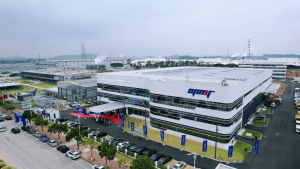
Guangdong Original Point Intelligent Technology Co., Ltd. specializes in multi-axis CNC laser processing systems for precision manufacturing.
| Credential | Detail |
|---|---|
| Patents | 302 granted (62 invention patents) |
| Certifications | ISO 9001/14001/45001 |
| Facility | 30,000 m² |
| Annual Capacity | 1,000 systems |
| Industries | Automotive, Aerospace, Medical Device, Precision Tooling |
| Key Clients | Nissan, Toyota, Honda |
| Technical Team | 113 specialists including 7 PhDs |
| R&D Partners | Chinese Academy of Sciences |
Ready to discuss your custom laser system requirements? Contact OPMT’s applications engineering team for a complimentary feasibility assessment and preliminary project proposal.
Disclaimer
This content is compiled by OPMT Laser based on publicly available information for reference only; mentions of third-party brands and products are for objective comparison and do not imply any commercial association or endorsement.
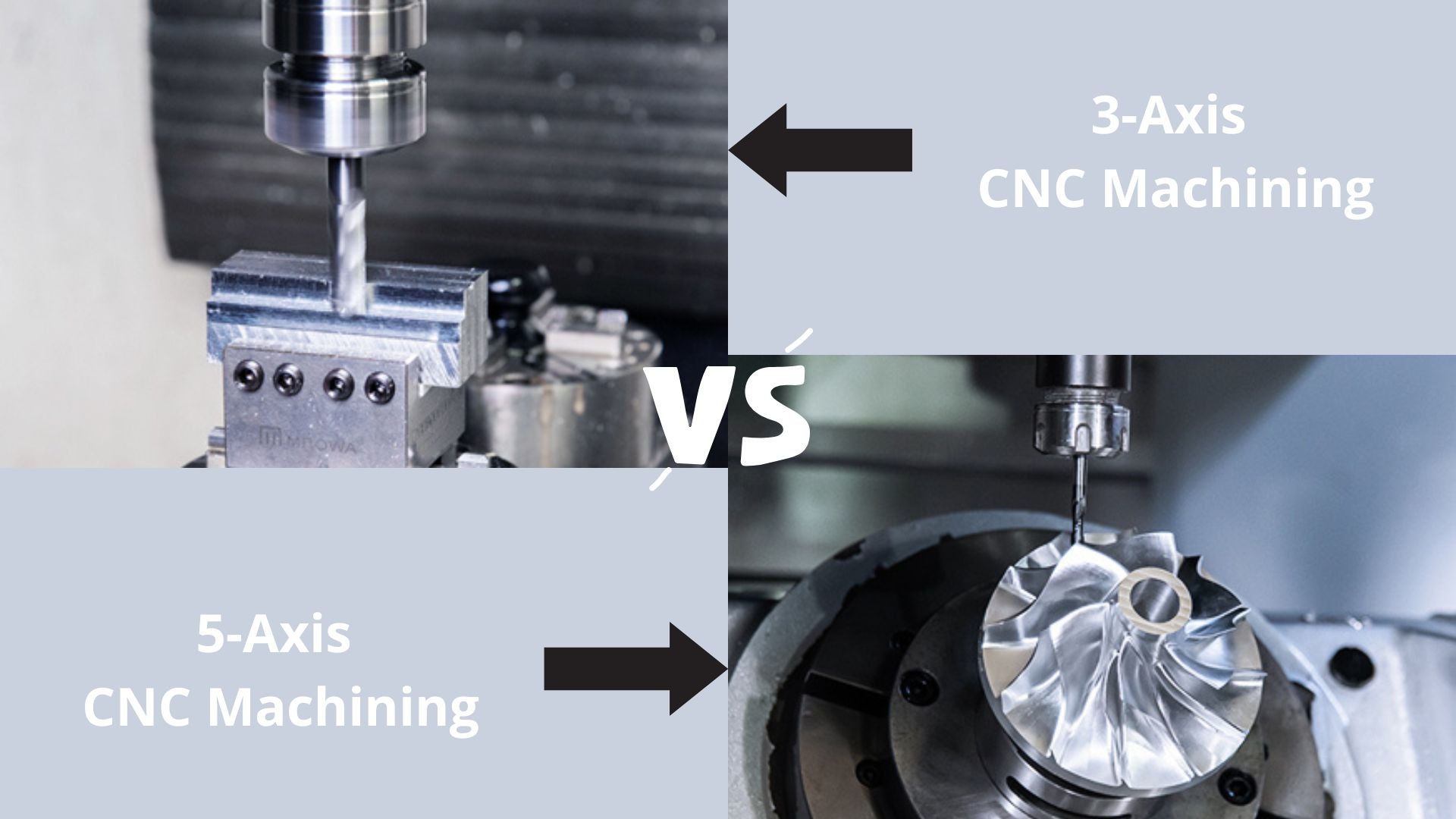
Explore the world of CNC machining as we compare 3-axis and 5-axis technologies. From basic operations to complex geometries, find out which machine suits your manufacturing needs in 2025.
Looking for the best 5-axis CNC machining center suppliers? Check our top 10 list for expert insights and find the perfect fit for your needs!
Explore the top 10 laser metal cutting machines of 2025, featuring industry leaders like Trumpf, Bystronic, and OPMT Laser. Compare cutting-edge technology, precision, and efficiency to find the perfect solution for your manufacturing needs.

Uncover the top 10 laser cutting manufacturers for 2025, featuring trusted brands, competitive pricing, and innovative technology that can transform your production process.

Please fill in your contact information to download the PDF.


