Vereinbaren Sie einen Besuch

Egal ob Sie eine allgemeine Beratung oder spezifische Unterstützung benötigen, wir helfen Ihnen gerne weiter.

Name(Erforderlich)
Adresse(Erforderlich)
Bitte lassen Sie uns wissen, was Sie beschäftigt. Haben Sie eine Frage an uns? Stellen Sie sie einfach.

ODM Laser Solutions: Kundenspezifischer Fertigungsprozess

Custom laser machining systems demand more than off-the-shelf modifications. When your production requirements exceed standard equipment capabilities—whether you’re drilling 0.3mm holes through silicon carbide ceramics or finishing PCD tool geometries with ±0.003mm tolerances—you need an ODM partner who engineers complete solutions from blank paper to production floor.

Guangdong Original Point Intelligent Technology (OPMT) has developed custom laser systems for automotive tier-one suppliers including Nissan, Toyota, and Honda since 2015. Our ODM methodology differs from conventional approaches: rather than adapting existing platforms, we architect systems around your processing physics, material interactions, and production constraints. The result is equipment that achieves specifications impossible with catalog machines—like our aerospace client’s femtosecond drilling system that eliminated thermal damage entirely while cutting cycle time by 66%.

This technical overview details OPMT’s five-phase ODM development process, examines our engineering infrastructure supporting custom system design, and presents documented case evidence demonstrating how collaborative development translates conceptual requirements into production-qualified laser machining systems.

What ODM Actually Means in Laser System Development

ODM (Original Design Manufacturing) fundamentally differs from OEM relationships in responsibility allocation and intellectual contribution. When you engage an OEM manufacturer, you deliver complete engineering documentation—CAD models, electrical schematics, bill of materials, assembly procedures. The manufacturer executes to your specifications. ODM inverts this relationship: you provide application requirements and performance objectives; the manufacturer assumes engineering responsibility for translating those needs into functional designs.

This distinction proves critical in laser system development where processing physics, thermal management, motion dynamics, and control algorithms interact in complex ways. Most organizations seeking custom laser equipment possess deep application knowledge—they understand their materials, quality requirements, and production constraints—but lack specialized expertise in laser-material interactions, multi-axis kinematics, or precision optical system design. ODM partnerships leverage complementary strengths: your application expertise combined with the manufacturer’s laser engineering capabilities.

The collaboration becomes particularly valuable when developing first-of-kind systems. Consider texturing applications requiring femtosecond laser pulses synchronized with 5-axis motion while maintaining focus on curved mold surfaces. No standard equipment addresses this combination of requirements. An ODM partner engineers the complete solution: selecting appropriate laser sources, designing beam delivery optics, developing motion control algorithms, creating operator interfaces, and validating process capabilities through systematic testing.

OPMT’s ODM engagements typically begin with application demonstrations rather than equipment quotations. Prospective clients send material samples—PCD tool blanks, ceramic components, medical device substrates—for processing trials in our applications laboratory. These preliminary tests validate laser feasibility, establish baseline parameters, and identify technical challenges requiring custom engineering solutions before formal development begins.

OPMT’s Technical Foundation for Custom Development

ODM capability rests on engineering depth rather than manufacturing capacity alone. OPMT operates five dedicated research centers supporting custom system development: our Provincial Manufacturing Innovation Center, Engineering Technology Research Center, Ultrafast Laser Processing Joint Laboratory (established with the Chinese Academy of Sciences), Foshan Postdoctoral Workstation, and Graduate Student Joint Training Demonstration Site. This infrastructure enables fundamental research in laser-material interactions, not just product assembly.

Our 113-member technical team includes seven PhDs and seven Masters-level engineers specializing in laser physics, precision mechanics, motion control, and industrial software development. This composition reflects ODM requirements: PhD-level researchers investigate novel processing phenomena, while experienced engineers translate discoveries into production-ready systems. The balance between theoretical expertise and practical implementation experience determines whether custom development projects succeed or stall in prototype phase.

Patent portfolio composition provides another indicator of true ODM capability. OPMT holds 302 granted patents: 62 invention patents covering fundamental technologies, 147 utility model patents protecting specific implementations, 17 exterior design patents, and 9 software copyrights. The invention patent concentration matters most for ODM work—these represent novel solutions to technical problems, not incremental improvements to existing designs. Our femtosecond laser integration methods, RTCP compensation algorithms, and multi-laser synchronization techniques all originated from customer-driven ODM projects that required capabilities unavailable in commercial equipment.

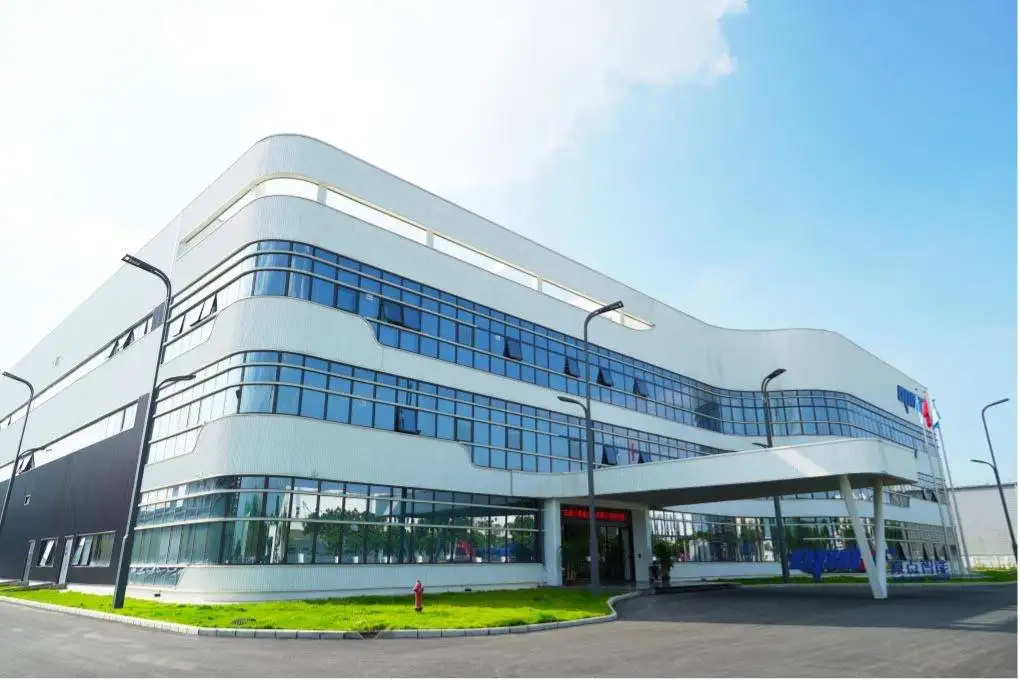
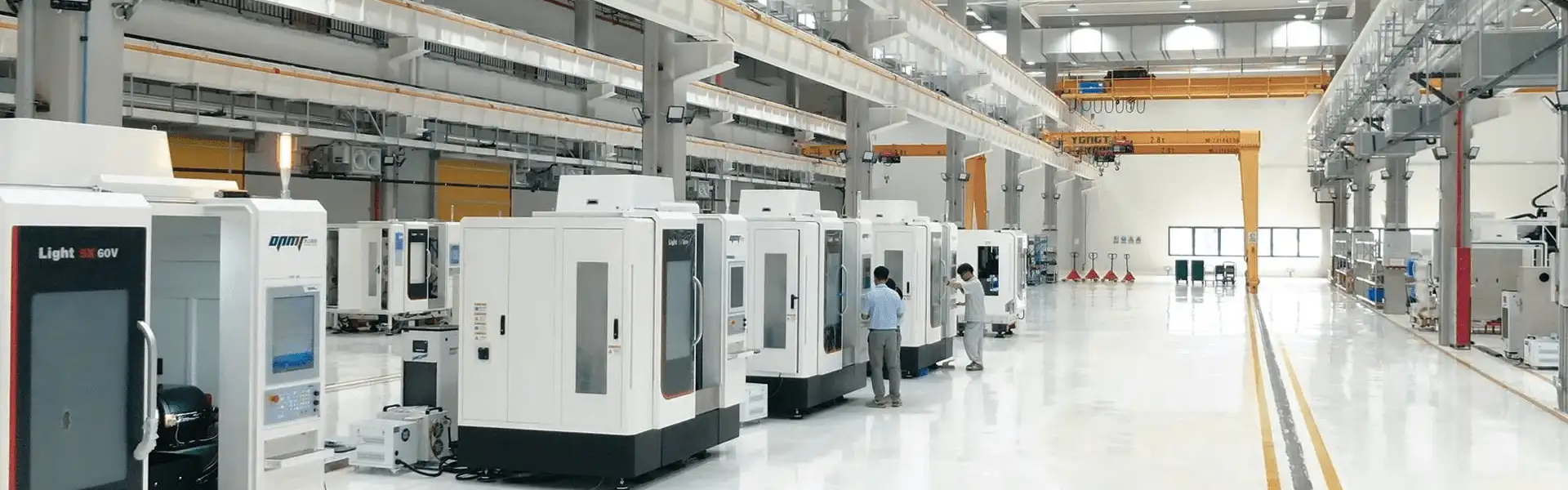
The 30,000 m² manufacturing facility supporting ODM development contains equipment most system integrators lack: laser interferometry systems for ±0.001mm positioning verification, environmental chambers for thermal stability testing, high-speed cameras for process visualization, and materials characterization tools for validating laser-induced modifications. These capabilities enable complete design validation without relying on external testing services that extend timelines and compromise confidentiality.

Phase 1: Requirement Translation and Technical Feasibility

ODM development begins with structured requirement capture sessions that differ fundamentally from sales consultations. OPMT’s applications engineers conduct these discussions: they probe processing objectives, material properties, throughput targets, quality criteria, and integration constraints through technical dialogue rather than feature checklists. A medical device manufacturer might request “precision cutting of titanium implants”—our team extracts the critical details: which titanium alloy (grade 5 Ti-6Al-4V has different laser absorption than grade 2 commercially pure), what edge quality requirements (burr-free for biocompatibility?), tolerance specifications (±0.01mm or ±0.001mm makes system architecture decisions), and production volume (prototype quantities versus 10,000 parts annually determines automation requirements).

Material analysis drives system architecture decisions early. We request representative samples for comprehensive laser interaction testing: ablation threshold determination across wavelengths (355nm UV, 532nm green, 1064nm IR), pulse duration optimization (nanosecond versus picosecond versus femtosecond regimes), and parameter window mapping. These empirical studies often reveal surprises—materials that appear similar behave differently under laser irradiation. Carbon fiber composites with identical visual appearance show dramatically different processing characteristics depending on resin matrix chemistry and fiber orientation.

The feasibility phase produces a Technical Requirement Specification (TRS) document that establishes mutual understanding before design commitment. This document defines measurable success criteria: positioning accuracy verified through laser interferometry, process speed demonstrated with production samples, edge quality quantified through microscopy, and thermal effects characterized via metallurgical cross-sections. Vague requirements like “high quality” or “fast processing” get converted to numerical specifications with defined measurement methods.

IP framework establishment occurs during this initial phase rather than after design completion. We implement project-specific confidentiality protocols: designated secure servers for file storage, access restricted to essential personnel, separation of your project from other customer work, and clearly documented ownership of background IP (our laser technologies), jointly developed IP (custom processing methods), and foreground IP (your application-specific innovations). Contracts specify what each party can use commercially—preventing situations where either side develops competitive products using collaborative work inappropriately.

Phase 2: Engineering Design and System Architecture

Concept design translates validated requirements into preliminary mechanical layouts, optical system configurations, and control architectures. OPMT’s approach emphasizes modular design enabling future adaptation while meeting immediate specifications. Our Light 5X series platforms demonstrate this philosophy: standardized machine bed construction, linear motor drive modules, and NUM CNC foundations support varied laser sources, workstation configurations, and automation integration without complete redesign.

The engineering team evaluates competing technical approaches through parallel concept development. For a recent automotive tooling project requiring PCD insert finishing with <0.005mm profile accuracy, three motion system architectures were analyzed: traditional ball screw drives, linear motor direct drives, and hybrid configurations. Each approach underwent thermal modeling, dynamic simulation, and error budgeting. Linear motors ultimately proved necessary despite higher cost because thermal expansion of ball screw drives exceeded the error budget even with sophisticated compensation.

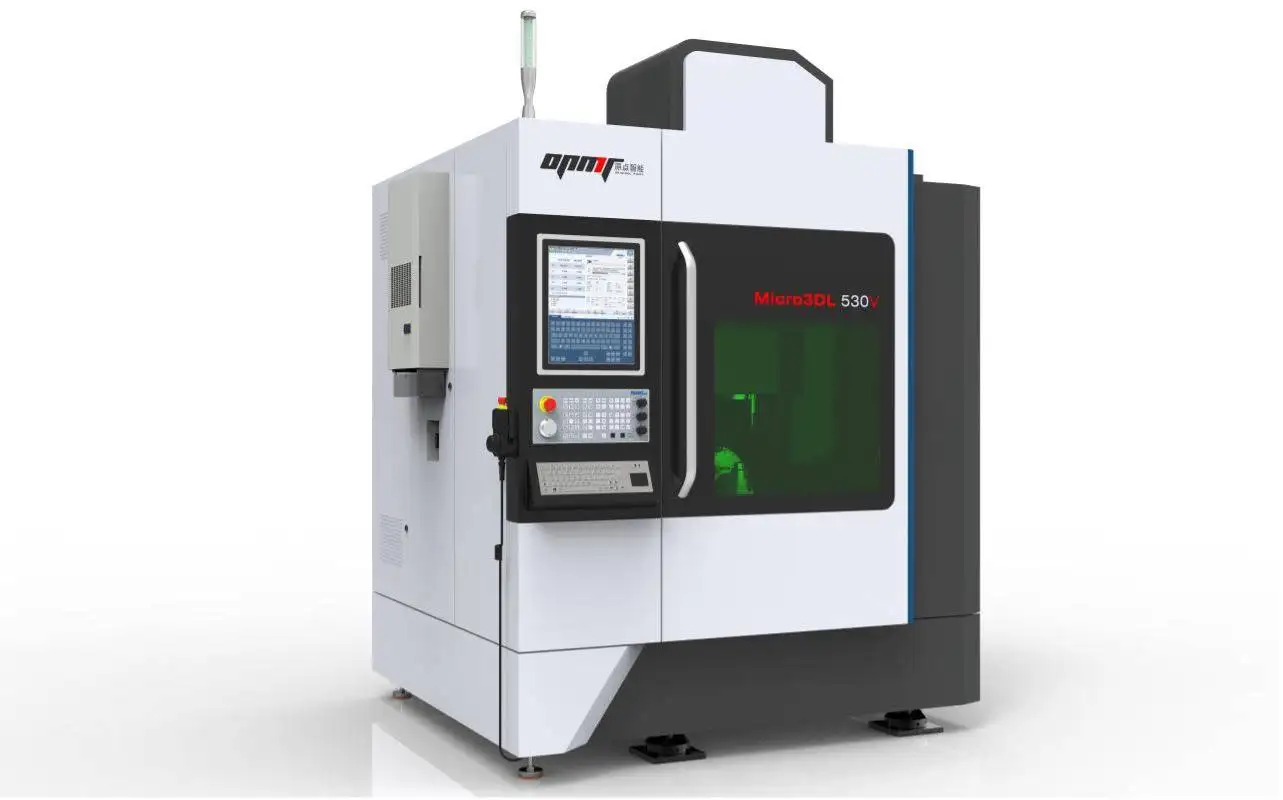
Optical system design often presents the most challenging custom engineering work. While mechanical positioning systems rely on established tribology and control theory, laser beam delivery for complex geometries requires application-specific solutions. Consider texturing curved mold surfaces with femtosecond lasers: the beam path must maintain constant focus distance while the workpiece rotates through 5-axis motion. We developed custom galvanometer integration with RTCP compensation enabling the Micro3D L530V Femtosekundensystem to maintain <1μm focus accuracy across ±110° workpiece angles—a capability achieved through iterative optical modeling and experimental validation.

Software architecture receives equal design attention with mechanical systems. Our proprietary GTR (Grinding Tool Revolution) software evolved from ODM customer requirements that standard CAM packages couldn’t address. The software imports 3D tool models, automatically generates collision-free toolpaths accounting for fixture geometry, simulates complete machining cycles before cutting metal, and adaptively adjusts parameters based on real-time process monitoring. Each ODM project potentially contributes new modules: a jewelry manufacturing engagement added diamond cleavage plane analysis; an aerospace project contributed composite material thermal limit protection algorithms.

Design reviews involve customer engineering teams directly—we share CAD models, simulation results, preliminary parts lists, and risk assessments. This transparency serves dual purposes: it validates design direction against application requirements while educating customers about system capabilities and limitations. Realistic performance expectations prevent disappointment during final delivery.

Phase 3: Prototyping With Production-Intent Hardware

OPMT builds functional prototypes using production-quality components rather than laboratory mock-ups. This approach costs more initially but compresses overall development time by eliminating the “it worked in the lab but fails in production” phenomenon. When we prototype a custom drilling system, it contains the actual laser source, production-grade linear motors, final control hardware, and representative fixturing.

Systematic validation testing follows documented protocols adapted from our standard equipment qualification procedures. Geometric accuracy verification employs laser interferometry measuring positioning errors across full axis travel—not just at calibration points. A recent 5-axis system underwent 729 measurement positions (9 X-axis positions × 9 Y-axis positions × 9 Z-axis positions) revealing positioning variations correlating with ambient temperature changes. This discovery prompted enhanced thermal compensation algorithms that improved repeatability from ±0.008mm to ±0.003mm.

Dynamic performance testing uses ballbar circular interpolation analyzing actual machining motion rather than single-axis positioning. This technique reveals complex interaction effects between axis synchronization, servo tuning, mechanical compliance, and control loop timing. Ballbar testing identified resonance at specific feed rates in one custom system—structural reinforcement at the column-bed joint eliminated the vibration mode improving circular accuracy from 12μm deviation to <5μm.

Process capability studies execute statistically designed experiments mapping parameter windows. For a carbide tool grinding application, we systematically varied laser power (60W to 100W), pulse repetition rate (20kHz to 80kHz), scan speed (5 m/min to 25 m/min), and pass depth (0.01mm to 0.05mm) across 48 test conditions. Resulting data established optimal parameters delivering target edge geometry while maximizing material removal rate—documentation that becomes the foundation for production process procedures.

Customer involvement during validation testing proves essential. We invite client engineers to witness testing, examine sample parts, review data, and suggest refinements. This collaboration often uncovers application nuances missed during requirement capture. A medical device customer discovered during validation testing that their titanium implant processing required specific pulse overlap percentages to achieve desired surface roughness—a detail that hadn’t emerged during initial discussions but was easily accommodated through parameter adjustment.

Phase 4: Production Transition and Quality System Integration

Production engineering converts validated prototypes into manufactureable products. This phase addresses component sourcing, assembly procedures, testing protocols, and quality documentation required for consistent system fabrication. OPMT’s ISO 9001 quality management system provides framework procedures—custom projects add specific inspection criteria, calibration requirements, and acceptance testing protocols.

Manufacturing drawings and assembly instructions receive particular attention for custom equipment. Standard products rely on experienced technicians who’ve built dozens of units; custom systems may represent first-time assemblies. We develop detailed work instructions with photographs, critical dimension callouts, torque specifications, alignment procedures, and quality checkpoints. One complex optical alignment procedure required 17-step sequential process with intermediate verification at four stages—documentation enabling consistent assembly by different technicians.

Supplier qualification becomes critical when custom designs incorporate specialized components. A water-guided laser system required custom beam coupling optics unavailable commercially. We qualified two potential suppliers through prototype part evaluation, conducted site audits verifying manufacturing capabilities, established inspection criteria with coordinate measuring machine (CMM) verification, and created approved supplier documentation. Dual-sourcing protected against supply disruptions while maintaining quality consistency.

First Article Inspection (FAI) represents the formal transition from development to production. The initial production unit undergoes complete dimensional verification, functional testing, and performance validation against original specifications. FAI documentation for a recent 5-axis system comprised 247 pages covering mechanical measurements, electrical testing, software validation, optical alignment verification, and process capability demonstration. This package becomes the quality standard for subsequent production units.

Phase 5: Installation, Training, and Production Qualification

Site preparation guidelines address facility requirements often overlooked during development focus. Custom laser systems may demand specific foundation specifications (vibration isolation for ±0.003mm accuracy), environmental controls (temperature stability within ±2°C), utility capacities (adequate electrical service, compressed air quality/flow), and safety infrastructure (laser safety interlocks, beam enclosures meeting OSHA/EU standards). We provide detailed site preparation documents 60 days before shipment enabling customers to complete necessary facility modifications.

Installation procedures follow structured commissioning protocols beginning with mechanical leveling and foundation verification. Our technicians use precision levels and laser alignment tools establishing machine geometry meeting specification tolerances. A recent automotive tooling system installation required 0.02mm/m bed levelness—achieved through systematic shimming over three days followed by 48-hour thermal stabilization before optical alignment commenced.

Operator training extends beyond basic machine operation into process understanding and troubleshooting methodology. Our standard one-week training program covers machine operation fundamentals, programming procedures using GTR software, process parameter selection, quality verification techniques, routine maintenance protocols, and systematic troubleshooting approaches. We emphasize teaching underlying principles—why certain parameters affect edge quality, how thermal effects influence accuracy, what geometric errors indicate mechanical issues—enabling operators to adapt procedures for future applications rather than simply following recipes.

Production qualification executes statistically valid sampling demonstrating process capability under actual manufacturing conditions. We typically run 30-piece production lots with complete dimensional inspection establishing Cpk values for critical features. A medical device customer’s titanium implant finishing required Cpk ≥1.67 for bore diameter (target 4.000mm ±0.010mm). Initial capability study achieved Cpk=1.89 with process centered at 4.001mm, standard deviation 0.0016mm—providing comfortable margin against specification limits while identifying process stability.

Remote diagnostic capabilities activate post-installation enabling ongoing technical support without site visits. OPMT systems incorporate secure VPN connections allowing our applications engineers to monitor process parameters, review error logs, adjust control settings, and observe operations through integrated cameras. This capability proved valuable when a customer experienced unexpected edge quality variation—remote analysis revealed coolant contamination affecting laser coupling efficiency, resolved through filtration system upgrade.

Real-World Case: Aerospace Composite Drilling Development

A tier-one aerospace supplier approached OPMT with challenging requirements: drill precise cooling holes through 2.6mm silicon carbide ceramic matrix composites used in turbine components. Hole diameters ranged 0.3mm to 1.4mm with positional tolerances ±0.002mm on complex curved surfaces. Traditional drilling caused severe delamination and microcracking; waterjet cutting lacked precision; EDM couldn’t process non-conductive ceramics.

Material analysis revealed the fundamental challenge—silicon carbide’s extreme hardness (9.5 Mohs) combined with brittleness created crack propagation during conventional machining. Laser processing offered the only viable approach, but wavelength, pulse duration, and delivery method required systematic investigation. We tested nanosecond fiber lasers (thermal ablation caused excessive heat-affected zones), picosecond lasers (reduced but didn’t eliminate cracking), and ultimately femtosecond lasers achieving “cold ablation” through photodisruption rather than thermal mechanisms.

The engineering solution integrated femtosecond laser technology (pulse duration <500fs) with our 5-axis RTCP motion control and galvanometer scanning. This hybrid architecture enabled the mechanical axes to position the workpiece while high-speed galvanometer mirrors scanned the laser beam maintaining perpendicular incidence on curved surfaces. Achieving this required custom beam delivery optics, synchronized motion control between mechanical and optical axes, and real-time focus compensation accounting for surface geometry.

Process development consumed eight weeks of systematic experimentation mapping 156 parameter combinations across laser power, pulse repetition rate, scan strategy, assist gas type/pressure, and focal offset. We discovered that helical drilling trajectories with progressive diameter increase minimized internal stress accumulation—insight that became proprietary to the customer’s application. Final parameters delivered 0.3mm holes through 2mm thickness with <5μm edge chipping, zero delamination, and heat-affected zones <10μm.

Production system delivery occurred 11 months after initial contact—compressed timeline enabled through parallel engineering activities and prototype testing overlap. The system processes complete turbine components in single setups, drilling 200+ holes per part with 3× speed improvement versus previous methods. Most significantly, it eliminated 100% of delamination-related scrap that had plagued conventional drilling, delivering 18-month ROI through quality improvement alone.

Intellectual Property: Protecting Collaborative Innovation

ODM development generates valuable intellectual property requiring clear ownership frameworks. OPMT’s standard approach distinguishes three IP categories: background IP existing before the project (our laser technologies, control systems, software platforms), jointly developed IP created collaboratively (custom processing methods, application-specific algorithms), and foreground IP specific to customer applications (their product designs, process recipes, fixture configurations).

Contractual language specifies each party’s rights precisely. Background IP remains owned by the developing party with licenses granted for project use. Jointly developed IP typically defaults to joint ownership with defined commercial use rights—OPMT might use learning from your project to develop different applications, while you gain competitive advantage in your specific market. Foreground IP becomes customer property exclusively—we cannot use your proprietary fixture designs or process parameters for other clients, even in different industries.

Practical IP protection extends beyond legal agreements into operational controls. Customer projects receive isolated network storage with encrypted access limited to designated personnel. Design documentation includes confidentiality headers and distribution restrictions. Our manufacturing floor segregates custom equipment assembly in separate areas preventing casual observation. Supplier communications disclose only specifications necessary for component fabrication without revealing application context.

Patent development occasionally emerges from ODM collaborations when novel solutions address broad industry needs. We maintain transparent policies: customer engineers who contribute to inventions receive named inventor credit; ownership follows contractual IP frameworks; commercial exploitation requires mutual agreement. This approach preserved relationships while enabling valuable innovation commercialization. Our femtosecond laser integration methods, now protected by invention patents, originated from aerospace customer requirements—developed collaboratively, owned jointly, commercialized appropriately.

Beyond Delivery: Production Optimization and Lifecycle Support

OPMT’s service commitment extends throughout equipment lifecycle beginning with comprehensive technical documentation. Custom systems receive complete electrical schematics showing every circuit connection, pneumatic diagrams detailing air system architecture, software source code documentation enabling future modifications, maintenance procedures with illustrated step-by-step instructions, spare parts lists with supplier information, and calibration protocols specifying verification frequencies and acceptance criteria. This documentation enables customer maintenance teams to support equipment independently while providing foundation for OPMT technical assistance when needed.

Preventive maintenance programs schedule regular inspections maintaining system accuracy and preventing unplanned downtime. Typical schedules include daily operator checks (laser output verification, axis motion smoothness, coolant levels), weekly detailed inspections (filter cleaning, lubricant levels, safety interlock verification), monthly calibration checks (ballbar circular testing, laser power stability), and annual comprehensive calibration (full laser interferometry, rotary axis certification, optical alignment verification). These procedures catch developing issues before they affect production quality.

Process optimization consultation helps customers maximize equipment utilization as applications evolve. When a PCD tooling manufacturer wanted to expand from milling inserts to complex drill geometries, our applications engineers conducted on-site process development determining optimal parameters for the new part family. When a medical device customer needed to process a new titanium alloy, we collaborated on parameter adaptation maintaining edge quality specifications. This ongoing technical partnership preserves equipment value as production requirements change.

Response times for technical support reflect service priority appropriate for production equipment. Standard agreements provide 24-hour on-site response within Guangdong Province, 48-hour response elsewhere in China, and 72-hour international response with remote diagnostic support initiating within 4 hours. These commitments require regional service presence, spare parts inventory, and trained technicians—infrastructure investments that differentiate manufacturers committed to long-term customer success from those focused purely on equipment sales.

Initiating Your Custom Development Project

ODM engagement begins with preliminary technical consultation assessing application feasibility and defining project scope. OPMT offers complimentary feasibility assessments for qualified projects—submit application descriptions, material specifications, quality requirements, and throughput objectives through our technical inquiry portal. Include representative material samples when possible enabling laser processing trials that validate basic feasibility before formal development discussions.

Prepare realistic timeline expectations reflecting custom development complexity. Simple adaptations of existing platforms may complete in 4-6 months; novel systems incorporating new technologies typically require 9-15 months from contract signing to production qualification. Timeline compression through parallel engineering and expedited procurement carries cost penalties—discuss schedule drivers early enabling appropriate resource allocation.

Budget discussions should encompass complete project scope including engineering development, prototype fabrication, testing/validation, production system manufacturing, installation/training, and ongoing support. ODM development costs typically exceed standard equipment by 30-50% for initial systems, declining as production quantities increase amortizing engineering investment. However, performance advantages, competitive differentiation, and operational efficiency often deliver ROI within 18-24 months for production applications processing substantial volumes.

Success criteria definition prevents misunderstandings during final acceptance. Specify measurable performance requirements: dimensional tolerances verified through CMM inspection, process speeds demonstrated with production parts, edge quality quantified via microscopy, reliability characterized through extended run testing. Vague goals like “better than existing methods” create acceptance disputes—numerical specifications with defined measurement procedures enable objective validation.

Technical FAQ

How long does custom ODM laser system development typically require from initial contact to production delivery?

Standard ODM projects require 6-12 months depending on technical complexity and customer decision timelines. This encompasses initial feasibility assessment (3-4 weeks), conceptual design and customer review (6-8 weeks), prototype construction and validation testing (10-14 weeks), production engineering (4-6 weeks), manufacturing (6-10 weeks), and installation/training (2-3 weeks). Projects leveraging existing platform architectures may compress to 4-6 months, while novel systems incorporating first-of-kind capabilities can extend to 15+ months. Timeline compression through parallel activities and expedited procurement is possible but increases costs 15-25%.

What intellectual property protections does OPMT implement during collaborative ODM development?

OPMT establishes formal confidentiality agreements before technical discussions, implements project-specific access controls restricting information to essential personnel, maintains encrypted secure servers for design documentation, and clearly defines IP ownership categories in development contracts. Standard frameworks distinguish background IP (owned by developing party), jointly developed IP (shared ownership with defined commercial rights), and foreground IP (customer-owned application-specific technologies). Manufacturing processes segregate custom equipment assembly preventing casual observation, while supplier communications disclose only specifications necessary for component fabrication without revealing application context.

Can OPMT develop completely novel laser systems or only adapt existing product platforms?

OPMT’s ODM capability spans platform adaptation through first-of-kind system development. Our five research centers including the Ultrafast Laser Processing Joint Laboratory (established with the Chinese Academy of Sciences) conduct fundamental research in laser-material interactions enabling novel processing methods. Recent first-of-kind developments include femtosecond laser integration with 5-axis RTCP control for composite drilling, water-guided laser systems for heat-sensitive materials, and synchronized multi-laser architectures for complex texturing. The 113-member technical team including 7 PhDs provides expertise for fundamental innovation beyond incremental product modifications.

What quality validation and testing protocols ensure custom systems meet specifications reliably?

Custom systems undergo identical validation protocols as standard products: laser interferometry verifies ±0.005mm linear positioning accuracy across full travel, ballbar circular testing characterizes dynamic performance and servo tuning, rotary axis calibrators measure angular positioning, beam profilers confirm optical quality, and statistical process capability studies (typically 30-piece sampling) establish Cpk values for critical features. Testing follows ISO 230 geometric accuracy standards with documented results forming Factory Acceptance Test (FAT) packages. Site Acceptance Testing (SAT) repeats critical validations after installation confirming performance under actual production conditions. All systems receive comprehensive documentation including test procedures enabling periodic recalibration.

How does ODM development cost compare to purchasing standard laser equipment, and what drives ROI?

ODM development typically adds 30-50% cost premium for initial systems compared to standard equipment, driven by engineering effort, prototype fabrication, custom component sourcing, and validation testing. However, operational advantages often deliver ROI within 18-24 months: elimination of secondary operations (one custom 5-axis system replaced three-operation sequence), process speed improvements (200% faster than EDM in PCD tooling), quality enhancement reducing scrap (aerospace composite drilling eliminated 100% delamination-related rejection), and competitive differentiation enabling premium pricing. Volume production amortizes development costs—second and subsequent units approach standard equipment pricing while retaining performance advantages.

What post-installation support and technical assistance does OPMT provide for custom ODM systems?

OPMT delivers comprehensive technical documentation (electrical schematics, pneumatic diagrams, software source code, maintenance procedures, spare parts lists, calibration protocols), one-week intensive operator training with hands-on processing exercises, and ongoing technical support with 24/48-hour on-site response depending on location. Remote diagnostic capabilities enable proactive monitoring and parameter optimization without site visits. Preventive maintenance programs include scheduled inspections maintaining accuracy specifications, while process optimization consultation assists with application expansion and production scaling. Spare parts availability through regional distribution centers ensures rapid component replacement minimizing downtime.

Can existing EDM programs or traditional machining toolpaths be adapted to custom laser systems?

OPMT’s proprietary GTR (Grinding Tool Revolution) software enables direct importation of EDM project files, DXF geometry, and 3D CAD models with automatic conversion to laser processing toolpaths. The software accounts for laser-specific considerations including focus compensation, thermal management, multi-pass strategies, and edge quality optimization. Minimal training required when transitioning from EDM to laser—typical learning curve spans 2-3 days for experienced EDM programmers. For applications without existing digital programs, GTR provides parameterized tool libraries, automatic 3D measurement of workpiece surfaces, and simulation capabilities enabling rapid program development for new part families.

What determines whether a custom laser application is technically feasible for ODM development?

Feasibility depends on fundamental laser-material interactions, achievable accuracy relative to requirements, throughput economics, and integration constraints. OPMT’s applications laboratory conducts preliminary testing validating basic processing viability: ablation threshold determination, edge quality assessment, thermal effect characterization, and parameter window mapping. Material samples enable empirical evaluation more reliable than theoretical analysis. Applications requiring positioning accuracy finer than ±0.002mm, processing materials transparent to available wavelengths, or throughput rates beyond laser ablation physics typically face feasibility challenges. However, novel approaches (different wavelengths, pulse durations, hybrid processes) sometimes overcome apparent limitations—systematic technical assessment clarifies viability before development commitment.

About OPMT Laser

Guangdong Original Point Intelligent Technology Co., Ltd. specializes in multi-axis CNC laser processing systems for precision manufacturing. With 302 granted patents, ISO 9001/14001/45001 certifications, and a 30,000m² manufacturing facility producing 1,000 systems annually, OPMT serves automotive, aerospace, medical device, and precision tooling industries worldwide. Our engineering team—including 7 PhDs and partnerships with the Chinese Academy of Sciences—develops custom laser solutions from concept through production, delivering systems trusted by Nissan, Toyota, and Honda for mission-critical applications.

Ready to discuss your custom laser system requirements? Contact OPMT’s applications engineering team for a complimentary feasibility assessment and preliminary project proposal.

Haftungsausschluss
Dieser Inhalt wurde von OPMT Laser auf Grundlage öffentlich verfügbarer Informationen zusammengestellt und dient ausschließlich zu Referenzzwecken. Die Erwähnung von Marken und Produkten Dritter dient dem objektiven Vergleich und stellt keine kommerzielle Verbindung oder Billigung dar.
Das könnte Ihnen auch gefallen