Schedule a Visit
Regardless of whether you require general advice or specific support, we are happy to help you.
Regardless of whether you require general advice or specific support, we are happy to help you.

TL;DR: High-precision 5-axis CNC machining in 2026 achieves micron-level accuracy of ±0.001-0.005mm (1-5 microns) through advanced vertical machining center architectures combining linear motor drives, closed-loop grating scale feedback, thermal compensation, and volumetric error control. Leading systems like OPMT’s Light 5X series deliver 0.005mm positioning accuracy with 0.003mm repeatability for aerospace, medical device, and precision tooling applications requiring sub-5-micron tolerances.
High-precision 5-axis CNC machining has evolved from a specialized capability to a manufacturing imperative as industries demand tighter tolerances and more complex geometries. In 2026, the question facing precision manufacturers is no longer whether micron-level accuracy is achievable, but how to implement systems that maintain sub-5-micron consistency across production volumes. Vertical 5-axis machining centers have emerged as the architecture of choice for applications requiring exceptional positioning accuracy, thermal stability, and space efficiency. This article examines the technical specifications, enabling technologies, and real-world performance benchmarks that define high-precision 5-axis CNC machining capabilities in contemporary manufacturing environments.
Industry-leading 5-axis CNC systems in 2026 deliver positioning accuracy between ±0.001mm and ±0.005mm (1-5 microns) as standard capability, representing a significant advancement from the ±0.010mm tolerances that characterized previous-generation equipment. OPMT’s Light 5X 40V and 60V vertical systems exemplify this performance tier, achieving 0.005mm positioning accuracy coupled with 0.003mm repeatability across XYZ linear axes.

Rotary axis precision has similarly advanced, with modern A/B/C-axis configurations maintaining ±10 arc-second positioning accuracy—equivalent to approximately 0.048mm deviation at a 1-meter radius. This angular precision proves critical for turbine blade machining and complex contour operations where rotary positioning errors compound across multi-axis interpolation paths.
What distinguishes contemporary systems is volumetric accuracy maintenance—the ability to sustain micron-level tolerances throughout the entire work envelope rather than at isolated calibration points. Laser interferometer verification per ISO 230-2 standards confirms that advanced systems maintain positional deviation within 0.008mm across the full XYZ travel range, even under thermal cycling conditions.
Aerospace and medical device manufacturers increasingly specify sub-5-micron consistency across production batches exceeding 1,000 parts. This demands not only instantaneous positioning accuracy but sustained repeatability over extended operating periods, necessitating integrated thermal compensation and real-time error correction systems.
Vertical 5-axis machining centers offer demonstrable precision advantages compared to horizontal configurations, beginning with 40% reduced footprint requirements. OPMT’s Light 5X 60V occupies just 2,300mm × 1,800mm (4.14 m²) while providing 600mm × 250mm × 300mm travel—a spatial efficiency that minimizes thermal gradient effects across the machine structure.
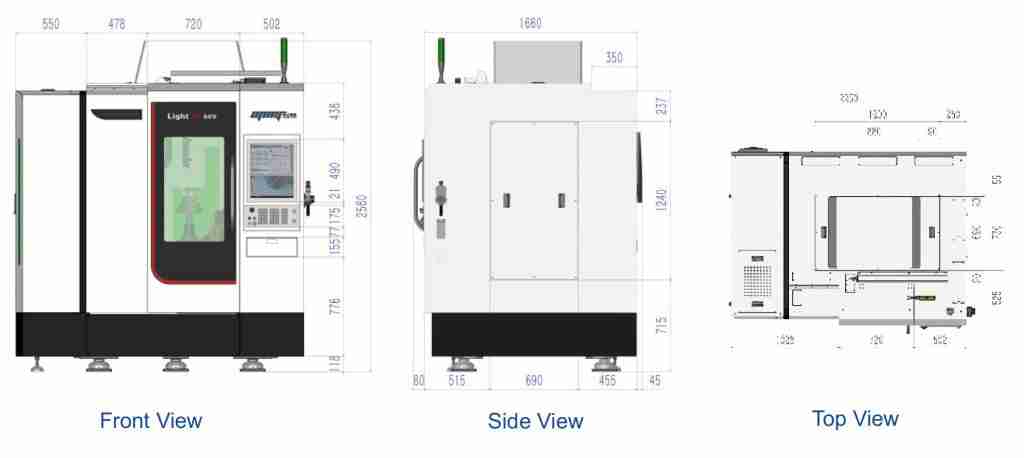
Key advantages of vertical architecture include:
The vertical configuration proves particularly advantageous for high-speed 5-axis CNC milling operations, where rapid acceleration/deceleration cycles generate dynamic forces that horizontal architectures struggle to counterbalance without compromising accuracy.
Achieving and maintaining micron-level precision requires integration of seven critical technologies:
The integration of these technologies distinguishes contemporary precision CNC systems from legacy equipment that relies on single-point accuracy validation and passive thermal management.
Different industries impose distinct tolerance specifications that drive high-precision 5-axis CNC system selection:
| Industry | Application | Tolerance Requirement | Critical Parameters |
|---|---|---|---|
| Aerospace | Turbine blades (Inconel) | ±0.005mm hole position | ±10 arc-second angular accuracy, Ra 0.4μm finish |
| Medical Devices | Titanium implants | ±0.003mm dimensional control | Ra 0.2μm surface finish, biocompatibility |
| Automotive EV | Battery mold cavities | ±0.010mm repeatability | 1,000+ part consistency, thermal cycling resistance |
| Precision Tooling | PCD/CBN inserts | ±0.001mm edge preparation | 0.0005mm tolerance stability, sub-micron edge quality |
| Semiconductor | Fixture components | Sub-micron circularity | ±0.0008mm perpendicularity, thermal expansion <0.5 ppm/°C |
Aerospace turbine blade manufacturing exemplifies extreme requirements: cooling hole positions must maintain ±0.005mm accuracy across blades measuring 200-400mm in length, while fir-tree root geometries demand ±10 arc-second angular precision to ensure proper turbine assembly. Medical implant production requires even tighter control, with femoral stem dimensional tolerances of ±0.003mm and surface finish specifications below Ra 0.2μm to prevent tissue rejection.
PCD and CBN cutting tool manufacturers face the most demanding specifications, requiring ±0.001mm tolerance stability during edge preparation operations. OPMT’s integrated laser processing capabilities complement mechanical machining to achieve these extreme precision requirements through non-contact material removal.
OPMT’s Light 5X series establishes industry benchmarks for vertical 5-axis precision, with the Light 5X 40V delivering 0.005mm XYZ positioning accuracy, 0.003mm repeatability, and ±10 arc-second rotary accuracy across its 400mm × 200mm × 200mm work envelope. The expanded-capacity Light 5X 60V maintains identical precision specifications while providing 600mm × 250mm × 300mm travel—addressing larger workpiece requirements without compromising accuracy.
Both systems feature 20,000 RPM spindles with HSK-A63 interfaces, enabling high-speed finishing operations on difficult-to-machine materials including titanium aluminides, Inconel 718, and carbide. The NUM CNC control platform provides RTCP (Rotation Tool Center Point) functionality, maintaining programmed tool path accuracy during simultaneous five-axis motion by dynamically compensating for workpiece rotation.
Integrated metrology systems including BLUM laser tool setting (±0.002mm accuracy) and HEIDENHAIN TS 460 touch probes enable in-process verification without workpiece removal, reducing setup time while ensuring dimensional conformance. Production data from automotive PCD tool finishing operations demonstrate consistent 0.003mm profile accuracy with ±0.001mm stability across 500+ part production runs.
Rigorous accuracy validation protocols distinguish OPMT systems, with every unit undergoing laser interferometer testing per ISO 230-2 standards before shipment. Volumetric accuracy verification across 21 diagonal positions confirms that positional deviation remains within 0.008mm throughout the work envelope, providing quantitative assurance of system capability for precision applications.
The Light 5X architecture integrates natural marble bases, linear motor drives on all five axes, and closed-loop HEIDENHAIN grating scales—the technological foundation enabling sustained micron-level performance in production environments. For manufacturers evaluating the best 5-axis CNC systems, OPMT’s documented performance benchmarks provide objective criteria for capability assessment.
High-precision 5-axis CNC machining in 2026 delivers micron-level accuracy through the convergence of vertical architecture advantages, advanced drive technologies, closed-loop feedback systems, and rigorous calibration protocols. Systems achieving ±0.001-0.005mm tolerances have transitioned from specialized applications to standard production requirements across aerospace, medical, automotive, and precision tooling sectors.
Key implementation considerations include:
When evaluating equipment providers for micron-precision applications, consult our comprehensive comparison of leading 5-axis CNC machine manufacturers to assess performance specifications, technology platforms, and industry-specific expertise across global suppliers. The intersection of proven vertical architecture, advanced control systems, and validated precision benchmarks defines the high-precision 5-axis systems capable of meeting 2026’s most demanding manufacturing requirements.
Disclaimer
This content is compiled by OPMT Laser based on publicly available information for reference only; mentions of third-party brands and products are for objective comparison and do not imply any commercial association or endorsement.
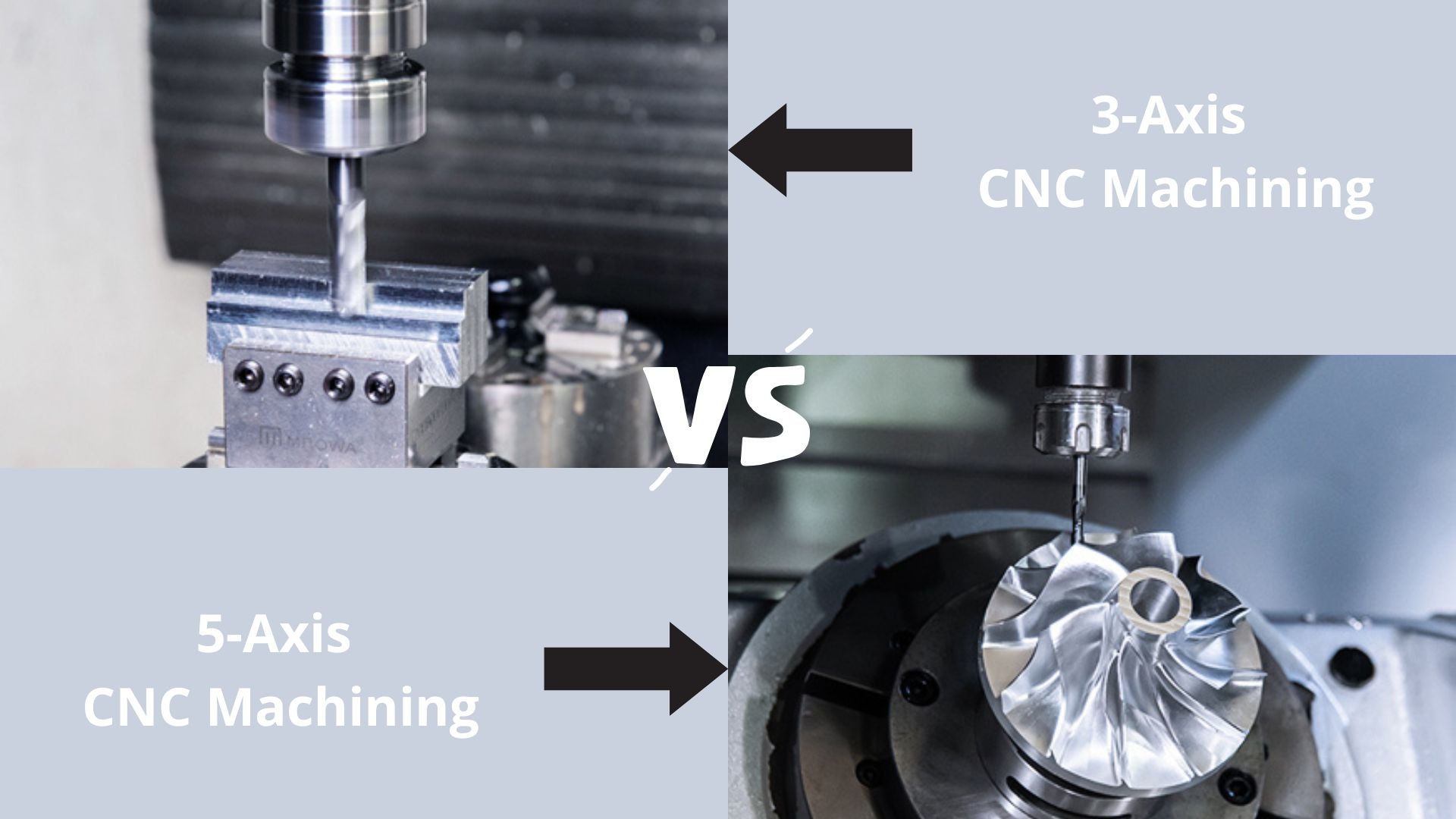
Explore the world of CNC machining as we compare 3-axis and 5-axis technologies. From basic operations to complex geometries, find out which machine suits your manufacturing needs in 2025.
Explore OPMT’s proven 5-phase ODM process for custom laser systems. ISO-certified manufacturing, ±0.003mm precision, IP protection. Submit project requirements today.
Looking for the best 5-axis CNC machining center suppliers? Check our top 10 list for expert insights and find the perfect fit for your needs!
Explore the top 10 laser metal cutting machines of 2025, featuring industry leaders like Trumpf, Bystronic, and OPMT Laser. Compare cutting-edge technology, precision, and efficiency to find the perfect solution for your manufacturing needs.

Please fill in your contact information to download the PDF.


